Windows Boot from CD-ROM: Set Your CD/DVD as the Primary Boot Device in BIOS or UEFI
Learn how to boot from a CD-ROM on Windows by changing BIOS/UEFI boot order, using bootable media and recovery tools to install or repair your system.
Windows users who need to boot from a CD-ROM — whether to install an operating system, run a live recovery environment, or flash firmware — still rely on firmware settings to hand control to optical media. Booting from a CD on Windows requires preparing bootable media, entering the PC’s BIOS or UEFI firmware interface, and setting the CD/DVD drive as the first boot device or selecting it from a one-time boot menu. This article walks through the practical steps, explains why the process still matters in a USB-first world, and covers troubleshooting, security considerations, and implications for IT teams and system administrators.



Why booting from optical media remains relevant for Windows users
Optical discs are no longer the dominant installation medium, but they retain advantages for specific workflows. A bootable CD-ROM can deliver a read-only, tamper-resistant environment for diagnostics, malware removal, or one-off OS installs on legacy machines. Some firmware updates and vendor recovery tools are still distributed as ISO images intended for optical media, and hardware with no USB boot support (older servers and embedded systems) may require a disc. For technicians maintaining air-gapped systems or performing forensic reads, an optical boot can reduce the attack surface compared with network or USB-based methods. Understanding how to boot from a CD remains a useful skill in any Windows toolkit.
Create and verify a bootable CD or DVD for installation and recovery
Before changing firmware settings, ensure the disc is truly bootable. A proper bootable disc is typically created by burning an ISO image with a disc authoring tool that writes the ISO image as an image (not as a file copy). For Windows installers and many recovery suites, you’ll want to verify the ISO checksum provided by the vendor before burning to avoid corrupted media. When burning:
- Use a reliable burning application and choose “Burn image” or “Write ISO” mode.
- Select a lower burn speed if you’re working with older optical drives to improve compatibility.
- Confirm the disc is finalized so the firmware can read it during POST.
If the source is a Windows installation ISO, double-check that the image is intended for optical use (some vendor ISOs are tailored for USB-only deployment). Where possible, test the disc in another machine to confirm it boots before you rely on it for critical work.
How to access BIOS or UEFI firmware on Windows PCs
There are two common paths to reach firmware settings: interrupting the normal restart during the initial POST sequence, or using Windows’ advanced startup to reboot directly into firmware on UEFI systems.
- Traditional POST key method: With the computer fully off or during a restart, press the manufacturer-specific key as the system powers on. Common keys include Del, F2, Esc, F1; some vendors use F10 or F12. The exact key is shown briefly on-screen during boot or is listed in the system manual.
- Windows advanced startup (UEFI): On systems running modern Windows versions, go to Settings > Update & Security > Recovery > Advanced startup and choose Restart now. After restart choose Troubleshoot > Advanced options > UEFI Firmware Settings and select Restart to enter firmware.
When you reach the firmware interface, you’ll see either a traditional BIOS setup utility or a graphical UEFI configuration. The layout and labels vary by vendor, but the boot options or boot order section is the area you’ll use to prioritize the optical drive.
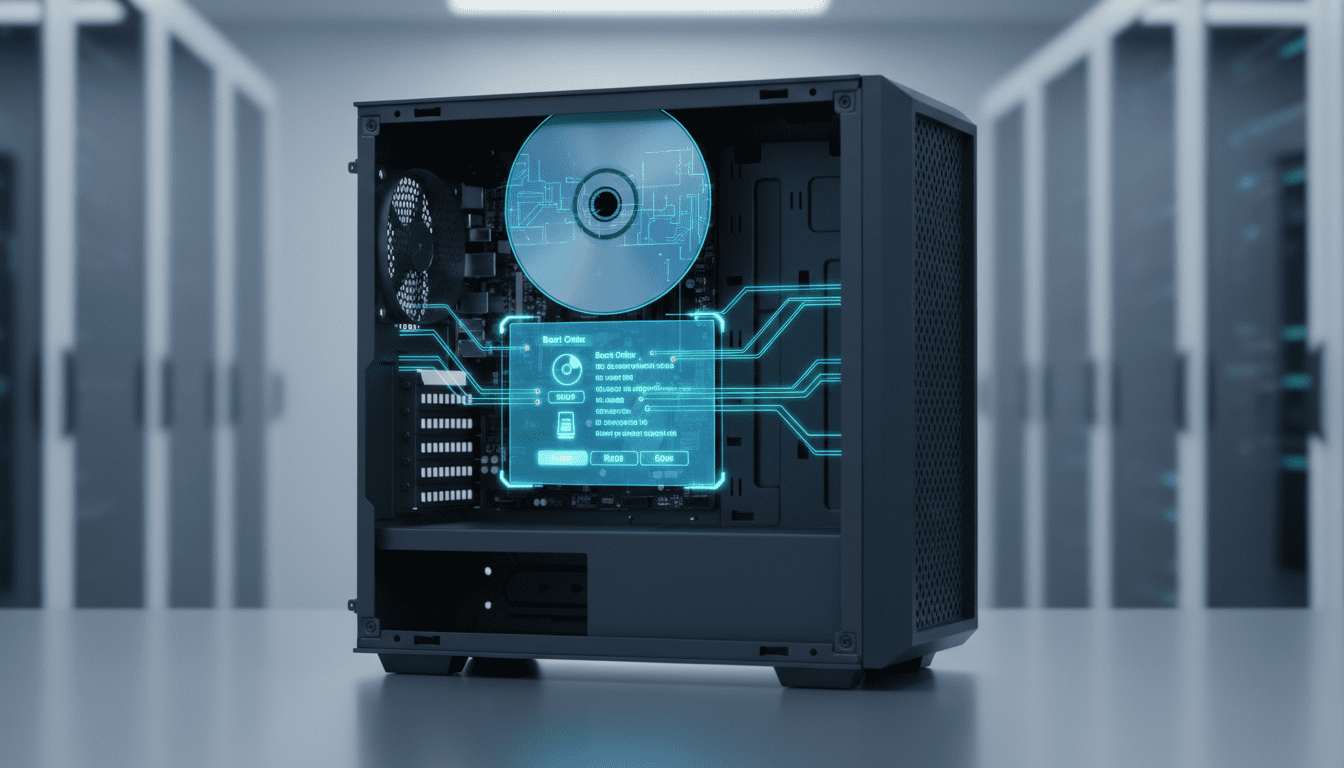
Change the boot order to make the CD/DVD drive primary
Once inside firmware, follow these general steps to set your CD/DVD drive as the primary boot device:
- Insert the bootable CD or DVD into the optical drive before restarting so the firmware detects it.
- Navigate to the Boot, Boot Order, or Boot Priority menu in BIOS/UEFI.
- Locate the CD/DVD or SATA/Optical device entry — in some menus it’s listed as “CDROM,” “DVD,” or the drive’s model number.
- Move the optical drive entry to the top of the list using the interface’s instructions (arrow keys, F5/F6, or drag-and-drop in graphical UEFI).
- Save changes and Exit (often F10 or a Save & Exit option). The system should reboot and attempt to boot from the optical disc first.
If the disc is bootable and the drive is functional, you’ll see the disc’s boot loader or setup screen. If nothing happens, return to firmware to confirm detection or try an alternate boot method.
Use a one-time boot menu as a quicker alternative
Many systems offer a Boot Device Selection (one-time boot) menu that bypasses permanently changing firmware order. Accessed with keys like F12, Esc, or F11 during the POST sequence, the one-time menu lets you choose the CD/DVD drive for a single boot without modifying boot priorities. This approach is useful for:
- Testing a disc without changing persistent settings.
- Running recovery tools without affecting the normal OS boot sequence.
- Avoiding secure-boot or policy conflicts that might prevent persistent changes.
Check your vendor’s startup messages or documentation for the exact boot menu key. Selecting the optical drive there will instruct the firmware to boot from the disc for that session only.
Troubleshooting common problems when a disc won’t boot
If the PC ignores the disc, work through these checks:
- Confirm the disc is bootable: Test it in another machine or reburn the ISO using “burn image” mode.
- Verify the optical drive is detected in firmware: If the drive is absent, confirm SATA power/data connections (desktop) or try booting a CD in a different machine to isolate hardware failure.
- Check Secure Boot and UEFI/Legacy modes: Some UEFI implementations will not boot unsigned legacy media when Secure Boot is enabled. Either disable Secure Boot temporarily or enable legacy/CSM boot support if the disc requires it.
- Avoid copying ISO contents onto a disc: Writing files instead of burning the image will not produce bootable media.
- Inspect the disc for scratches or dirt and clean it gently.
- Consider format/compression mismatches: Some older drives struggle with high-density DVD-Rs or dual-layer discs — try a different disc type or burn at a lower speed.
If optical boot continues to fail, creating a bootable USB drive from the same ISO is often a practical alternative and is widely supported by modern Windows deployment tools.
When to prefer USB or network boot over optical media
For most contemporary deployments, USB drives and network-based provisioning provide faster transfer speeds and greater flexibility. They are a better choice for:
- Large OS images and automated deployments (PXE or MDT).
- Machines without optical drives (ultrabooks, thin clients).
- Environments requiring scripted or unattended installs.
However, optical media can be preferable when you need a read-only, tamper-evident medium for forensic work, when working with legacy hardware that lacks USB boot support, or when vendor tools are distributed only as optical ISOs. Assess the environment and choose the medium that minimizes compatibility friction and security risk.
Security and firmware considerations for optical boot on Windows machines
Booting from external media introduces firmware-level considerations:
- Secure Boot: UEFI Secure Boot ensures only signed bootloaders run. If the CD’s bootloader isn’t signed for Secure Boot, you’ll need to disable Secure Boot or use a signed image. Enterprise-managed machines may have Secure Boot enforced by policy; coordinate with IT before making changes.
- Trusted Platform Module (TPM) and disk encryption: If BitLocker or another full-disk encryption is enabled, booting from an external disc won’t by itself allow access to encrypted volumes, but firmware changes or recovery attempts may require recovery keys.
- Firmware passwords and management: Many organizations enforce firmware passwords to prevent unauthorized boot-order changes. If a firmware password is present, obtain authorization from IT.
- Verifying media authenticity: Always obtain ISOs and recovery discs from trusted vendor sources and validate checksums to avoid installing compromised software.
Administrators should balance the need for flexibility during recovery against the security practice of restricting boot options to prevent unauthorized firmware-level access.
Practical use cases: installation, recovery, diagnostics and firmware updates
Booting from CD/DVD serves multiple concrete purposes in Windows environments:
- OS installation: Many older deployment workflows still use optical installers for clean installs, particularly on machines without USB boot support.
- Recovery and repair: Bootable rescue CDs provide tools for partition repair, file recovery, virus scanning, and registry restoration without mounting the internal OS.
- Diagnostics: Vendor hardware diagnostics often boot from optical media to run tests independent of the installed OS.
- Firmware updates: BIOS/UEFI and embedded controller updates sometimes ship as bootable ISOs for optical media, which can be safer for systems with limited USB boot options.
- Live environments: Live Linux discs are a convenient way to run a temporary environment for troubleshooting or to access data without modifying the host OS.
For enterprise IT and field technicians, knowing how to prepare and boot optical media can be an essential part of a broader recovery and maintenance toolkit.
Troubleshooting enterprise scenarios and automation alternatives
In business settings, optical booting may be restricted by policy or clustered with automation that eliminates manual firmware changes. Consider these approaches:
- PXE and network-based installs for mass provisioning.
- USB-based imaging with Microsoft Deployment Toolkit (MDT) or Windows Deployment Services (WDS).
- Using vendor-provided bootable USB creation tools for signed, secure images compatible with Secure Boot.
- Enrolling devices in management platforms (Intune, SCCM) to deliver recovery images and firmware updates remotely.
If optical boot is necessary in a managed environment, work with device management teams to whitelist boot media, create signed images, or provide supervised access to firmware interfaces.
Broader implications for developers, IT teams, and business operations
The mechanics of booting from CD-ROM intersect with larger trends in IT: the shift to cloud-native deployment models, the decline of optical hardware in new devices, and increasing reliance on firmware security features like Secure Boot and TPM. For developers and integrators, these shifts mean packaging software for USB or network boot and ensuring installers are signed and compatible with modern firmware. For businesses, standardized image-based provisioning and remote management reduce the operational need for manual optical media, but exceptions remain — regulated environments, legacy hardware, and disaster recovery plans still benefit from optical-readiness. Moreover, the continued presence of optical boot options underscores the importance of understanding firmware behavior when designing secure, resilient systems.
When to change firmware settings and when to seek help
If you’re comfortable with system-level operations and you control the device, entering firmware and changing boot order is straightforward and reversible. For corporate-owned devices, encrypted laptops, or systems under configuration management, consult IT before altering firmware or disabling Secure Boot. When in doubt, use a one-time boot menu to avoid persistent configuration changes and test media on an uncritical machine before deploying it in production. For administrators, documenting approved recovery workflows, distributing signed recovery media, and training technicians on firmware navigation reduces risk and speeds response during outages.
Practical tips to streamline optical boot workflows
- Label discs with version and checksum metadata to avoid confusion in multi-disc toolchains.
- Keep a small kit with a USB optical drive, low-speed blank discs, a verified ISO repository, and common boot keys per vendor.
- Maintain vendor instructions for firmware access across Dell, HP, Lenovo, ASUS, and other manufacturers — key sequences differ and are helpful when reimaging many models.
- Consider maintaining both an optical and USB copy of critical recovery images for maximum compatibility.
- Automate checksum verification and disc-burning processes in your build pipeline to reduce human error.
Security checklist before changing boot priorities
- Confirm you have authorization to change firmware settings on the device.
- Verify boot media integrity and vendor authenticity using checksums or signatures.
- Ensure recovery keys for disk encryption (BitLocker) are accessible if needed.
- Re-enable Secure Boot or restore prior firmware settings after recovery tasks to maintain security posture.
- Record any firmware password changes and coordinate with asset management.
Final thoughts on the role of optical boot in modern Windows environments
Optical media occupy a niche but persistent role in system maintenance, recovery, and certain specialized workflows. For technicians supporting a mixed fleet of devices — some modern, some legacy — knowing how to boot from a CD-ROM on Windows and how to navigate BIOS/UEFI firmware remains valuable. Where possible, combine optical techniques with modern deployment practices: create signed images, support USB and network provisioning, and maintain clear procedures that balance accessibility and security.
As hardware and firmware evolve, expect optical usage to decline further, but not vanish: some industries and legacy systems will continue to require read-only, tamper-resistant boot media. Administrators and developers should prepare for that hybrid reality by keeping recovery options diversified, maintaining clear documentation, and adapting tools for compatibility with Secure Boot and UEFI standards while leveraging network and USB-based provisioning for day-to-day operations.