
AI Optimization Reveals HR’s Operational Blind Spots and What People Teams Must Do Next
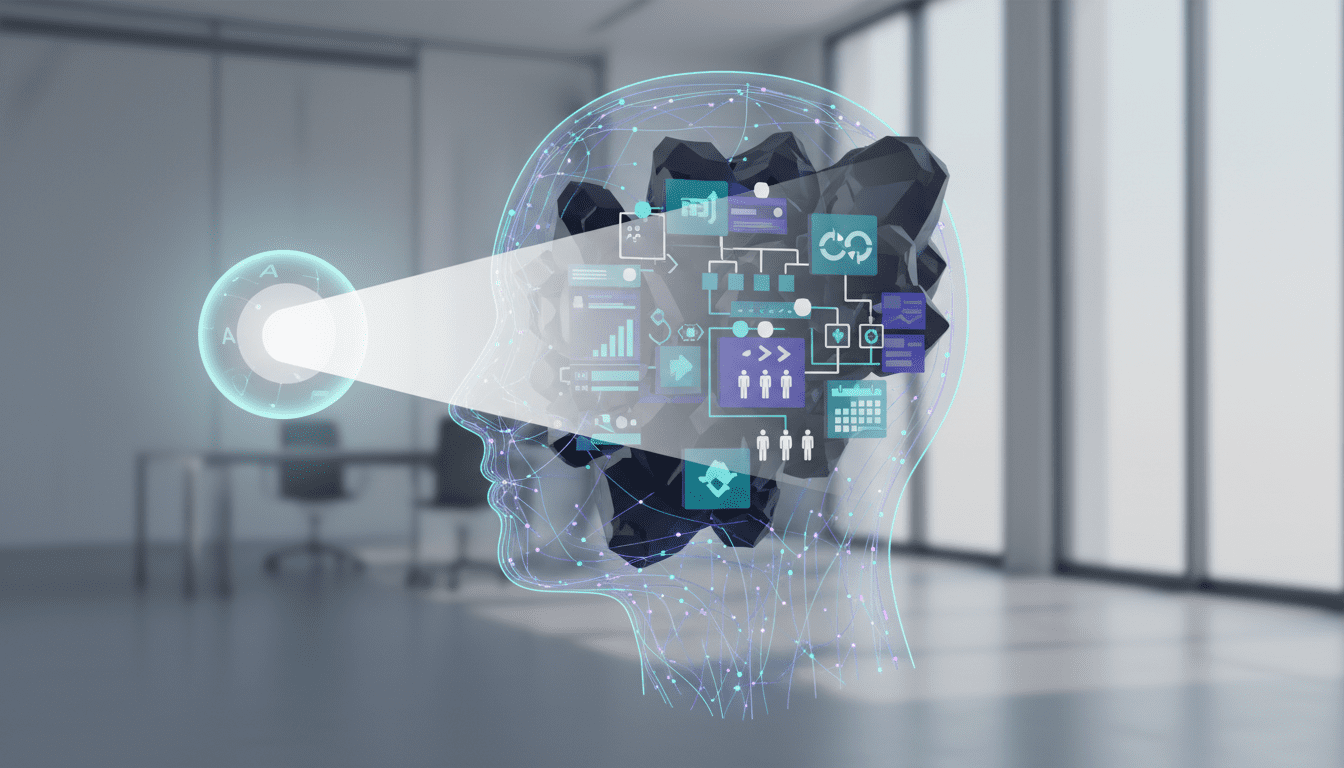
AI Optimization tools are surfacing HR operational blind spots, forcing changes in processes, governance, and talent strategy across modern people teams.
Why AI Optimization Is Forcing HR to Rethink Operations




AI Optimization is no longer an experimental add-on for HR teams; it has become an operational lever. As organizations deploy machine learning models and decision automation to streamline recruiting, performance management, payroll, and learning, these systems increasingly expose previously hidden gaps in data, workflow design, and governance. That exposure matters because it turns ambiguous inefficiencies into measurable failures — or, conversely, into measurable opportunities to improve fairness, speed, and cost-efficiency. For HR leaders, the arrival of AI-driven optimization tools means the people function must evolve from service delivery to system stewardship.
How AI Optimization Tools Surface Operational Blind Spots
When engineering teams build optimization models, they optimize for quantifiable objectives: time-to-hire, cost-per-hire, retention probability, training completion rates, or engagement scores. These models depend on inputs — HRIS records, ATS data, compensation bands, manager ratings, learning completions — and expose inconsistencies when those inputs are incomplete, stale, or biased. Common blind spots revealed by AI Optimization include:
- Data quality and completeness: Missing hire dates, inconsistent job codes, and fragmented people data get magnified when models try to predict or recommend actions.
- Label and metric mismatch: Historical performance ratings or attrition signals may reflect managerial bias, rendering predictions unreliable.
- Process fragility: Automation highlights manual handoffs and undocumented rules, which become points of failure when algorithms assume structured inputs.
- Compliance and privacy gaps: Automated decisions call attention to undocumented data sharing between HR systems and third-party vendors that may violate policies or regulations.
- Hidden bias: Predictive models can amplify historical inequities in hiring, promotion, or pay if inputs reflect biased past decisions.
- Operational opacity: When optimization produces unexpected outcomes, teams often lack instrumentation or traceability to diagnose the root cause.
By turning these latent issues into observable patterns — dashboards of false positives, uneven prediction accuracy across groups, or sudden drops in model performance — AI Optimization tools force organizations to confront the plumbing behind HR outcomes.
AI Optimization: What It Does, How It Works, and Who Should Use It
AI Optimization describes a class of systems that use machine learning, optimization algorithms, and business rules to recommend actions or automate decisions within HR workflows. Typical capabilities include candidate ranking, interview scheduling, personalized learning pathways, workforce planning scenarios, pay equity modeling, and churn prediction. At a technical level these systems combine feature engineering (transforming HR records into model inputs), supervised or unsupervised learning, constrained optimization (to meet fairness or budget limits), and an orchestration layer that integrates with HRIS, ATS, payroll, and calendar systems.
Who benefits? People teams, talent acquisition, total rewards practitioners, learning and development leaders, and business unit managers can all use AI Optimization to prioritize scarce resources and reduce manual toil. IT, security, and data teams are required partners — responsible for integration, identity, and model monitoring. Vendors market these tools to mid-market and enterprise customers, while smaller organizations may adopt packaged or embedded features within HR suites.
Availability mirrors maturity: many HR tech vendors ship optimization features today as part of applicant tracking systems, learning platforms, or HR platforms; custom-built models are common in larger organizations with dedicated people analytics teams. Adoption decisions should account for data readiness, governance maturity, and change management capacity.
Where Organizations Typically Misjudge Readiness
Adopting AI Optimization without an honest assessment of operational readiness creates risk. Common misjudgments include:
- Assuming historical HR data is representative. In many firms, data reflects structural changes — reorganizations, mergers, or policy shifts — that break model assumptions.
- Neglecting model lifecycle management. Models degrade as talent pools, economic conditions, and organizational designs change; without continuous validation they drift.
- Underestimating human-in-the-loop needs. Tools that provide recommendations still require clear escalation paths, accountability, and interpretability for managers who act on them.
- Skipping governance frameworks. AI use in HR touches protected characteristics and employment law; lacking a governance framework invites legal and reputational exposure.
Organizations that over-index on speed-to-deploy often create technical debt and governance gaps that surface when the optimization outputs are used in high-stakes decisions.
Operational Risks: Bias, Data Governance, and Security
AI Optimization amplifies three interlocking areas of risk.
Bias and fairness: Predictive models can reproduce or magnify biased historical decisions. If past hiring favored certain profiles, models trained on those outcomes may perpetuate exclusion. Detecting disparate impact requires measuring model performance across demographic groups, selecting fairness-aware objectives, and applying remediation techniques like re-weighting or fairness constraints.
Data governance: Optimization needs consistent, high-quality data. That requires canonical employee identifiers, standardized job taxonomies, and clear ownership of fields. Data lineage and provenance matter: HR professionals must know where inputs come from and how they were transformed. Policies on retention, consent, and minimization should be enforced through data contracts and automated checks.
Security and privacy: People data is sensitive. Integrations with third-party AI vendors increase the surface area for breaches. Access controls, encryption, secure APIs, and audit trails are fundamental. Organizations should apply least-privilege principles and separate development/test environments from production with anonymized or synthetic datasets wherever possible.
Addressing these risks is not only ethical but pragmatic: models are only as valuable as organizations’ trust in their outputs.
Practical Steps HR Teams Should Take Today
For HR leaders starting or accelerating AI Optimization, practical immediate steps include:
- Conduct a data inventory and quality assessment. Map where critical fields live, identify missing or inconsistent records, and prioritize fixes that improve model inputs.
- Establish a governance framework. Define ownership, approval gates, and acceptable-use policies for automated HR decisions. Include legal, privacy, and compliance stakeholders in the design.
- Start with explainable models for high-impact use cases. Use models and interfaces that provide reasoning about predictions so managers can understand and contest outputs.
- Implement monitoring and feedback loops. Track model accuracy, calibration, and downstream business KPIs. Build mechanisms so users can flag errors and contribute labeled corrections.
- Run bias and fairness tests before deployment. Simulate outcomes across demographic slices and apply mitigation where disparities appear.
- Invest in change management. Educate managers and HRBP teams about model purpose, limitations, and how to act when recommendations conflict with context.
- Use continuous validation. Periodically re-evaluate model assumptions and retrain on fresh data to prevent drift.
These steps form a pragmatic roadmap: they prioritize operational fixes that unlock the value of AI while reducing legal and ethical exposure.
Developer and IT Considerations for Integrations and MLOps
AI Optimization is as much an engineering challenge as it is a people challenge. Engineering teams should prioritize:
- Robust APIs and secure integration patterns. HR platforms must support SSO, scoped API keys, and granular role-based access for both internal systems and external suppliers.
- Observability and logging. Instrument feature pipelines, model predictions, and business outcomes to trace anomalies and accelerate root-cause analysis.
- Reproducible pipelines and model registries. Maintain model artifacts, training data snapshots, and deployment metadata to support audits and rollback.
- Deployment strategies that separate experimentation from production. Canary releases and shadow deployments let teams evaluate performance with minimal risk.
- Data minimization in test environments. Use synthetic or anonymized data sets to keep dev and test safely decoupled from live employee records.
- Collaboration between people analytics, engineering, and security. Tight feedback loops enable faster iteration and safer launches.
Adopting MLOps best practices reduces the chance that AI Optimization becomes a black box that HR cannot manage.
Business Use Cases and ROI Where AI Optimization Delivers Value
Organizations see measurable gains when optimization is applied to well-scoped, repeatable HR processes. Examples include:
- Recruitment efficiency: Candidate triage and interview scheduling automation lower time-to-hire and reduce recruiter workload while improving candidate experience.
- Workforce planning: Scenario-based optimization helps finance and HR balance headcount with budget constraints and projected demand.
- Learning personalization: Recommending tailored learning sequences based on role, skills gaps, and career pathways increases completion and skill adoption.
- Pay equity analysis: Optimization can model alternative compensation scenarios to surface inequities and test remediation strategies within budget constraints.
- Retention interventions: Predictive signals, combined with optimized intervention recommendations, can prioritize retention efforts where they have the greatest ROI.
Quantifying impact requires baseline metrics, A/B testing where feasible, and careful attribution — optimization tools are most convincing when they incrementally improve outcomes against a measurable baseline.
Selecting Vendors and Building Internal Expertise
Vendor selection should balance functional fit with governance capabilities. Key selection criteria include:
- Data handling policies and auditability: Ask vendors how they manage ingestion, storage, and model explainability.
- Ability to export models or operate under customer-controlled MLOps: Avoid vendor lock-in that makes audits or migrations costly.
- Support for fairness testing and customizable constraints: Look for vendors that let you enforce business rules and fairness objectives.
- Integration maturity with HRIS and ATS systems: Smooth data flows reduce engineering overhead.
- Track record and domain expertise: Vendors with HR-specific experience often provide domain-tuned features that generic AI providers do not.
Simultaneously, invest in internal capabilities: people analytics expertise, basic data engineering, and an understanding of ML concepts. Even when working with vendors, internal experts are essential for validating outputs and aligning models with business context.
Regulatory and Legal Considerations for People Data
Using AI in HR intersects with employment law, anti-discrimination statutes, and privacy regimes. HR and legal teams must consider:
- How automated recommendations align with non-discrimination obligations and civil rights protections.
- Whether candidate or employee profiling triggers notice, consent, or purpose-limitation requirements under privacy laws.
- Recordkeeping and audit requirements that may apply for hiring and promotion decisions.
- The liability model when automated recommendations contribute to adverse employment actions.
Proactive legal involvement, defensible audit trails, and the ability to demonstrate human oversight are critical mitigants. These practices are increasingly expected by regulators and auditors, even in jurisdictions without prescriptive AI laws.
Industry-Level Impacts and What This Means for HR Software Vendors
AI Optimization is reshaping the HR tech landscape. Vendors that embed transparent optimization and governance tooling have a competitive advantage with enterprise clients that demand accountability. At the same time, specialist startups focused on fairness testing, synthetic data generation, or people data observability are emerging as essential companions to core HR systems.
Broader industry trends interacting with AI Optimization include:
- Convergence with automation platforms and CRM systems for a unified talent lifecycle.
- Expansion of MLOps practices into people analytics, elevating engineering rigor in HR workflows.
- Increased demand for security and privacy features built for people data, creating a market for compliance-first HR solutions.
For developers and product teams, prioritizing extensible APIs, model explainability, and governance primitives will make HR offerings more defensible and attractive to enterprise buyers.
Measuring Success and Avoiding Common Pitfalls
Success is measured both in operational KPIs and in qualitative trust. Useful metrics include reduction in manual task time, improvement in time-to-fill, accuracy and calibration of predictive models, and measures of equitable outcomes across employee groups. Avoid the pitfalls of overfitting to short-term metrics — optimizing solely for speed or cost can undermine fairness and long-term retention.
Prioritize pilots with clear hypotheses, measurable metrics, and rollback plans. Use human oversight as a safety valve during early deployment, and automate only after observing consistent, explainable performance.
Practical Reader Questions Addressed in Context
What does AI Optimization do? It uses data and machine learning to recommend or automate HR actions aimed at improving defined objectives like speed, cost, or fairness.
How does it work? By transforming HR records into features, training models to predict or rank outcomes, applying constraints to meet policy requirements, and integrating recommendations into workflows via APIs and orchestration logic.
Why does it matter? Because it makes inefficiencies and biases measurable and actionable, offering both productivity gains and the risk of systemic error if not governed well.
Who can use it? Talent acquisition teams, people analytics, rewards and learning leaders, and their IT partners can leverage these tools. Larger firms often develop bespoke models; smaller teams can adopt vendor-hosted features embedded within HR platforms.
When will it be available? Optimization features are already available in many HR suites and standalone vendors; timeline for deployment depends on data readiness and governance maturity. Organizations typically progress from pilots to wider rollout over months, not days.
How Teams Can Prepare to Scale AI Optimization
To scale safely and sustainably, organizations should:
- Build cross-functional committees that include HR, data science, legal, and security to review use cases and approve deployments.
- Create a model inventory with documented purpose, owners, and performance metrics.
- Invest in education so managers understand model limitations and how to apply discretion.
- Standardize incident response so model failures or bias findings are addressed quickly and transparently.
- Build a culture that treats models as augmentative tools, not oracles; human judgment remains essential.
These preparedness activities reduce the operational friction that commonly stymies scaling.
AI Optimization is peeling back layers of HR operations that were previously informal or opaque, making visible the work required to run modern people systems responsibly. As models become more integral to decision workflows, HR teams will need to invest in data maturity, governance, and engineering practices that match the expectations placed on these systems.
Looking ahead, expect the next wave of HR software to prioritize explainability, embedded governance, and tighter integration with security and MLOps tooling; companies that adopt these patterns will be better positioned to extract reliable value from AI while minimizing legal, ethical, and operational risk.