
NWN Expands EMP with an AI-Powered Managed Security Operations Suite to Tackle Tool Sprawl and Alert Fatigue
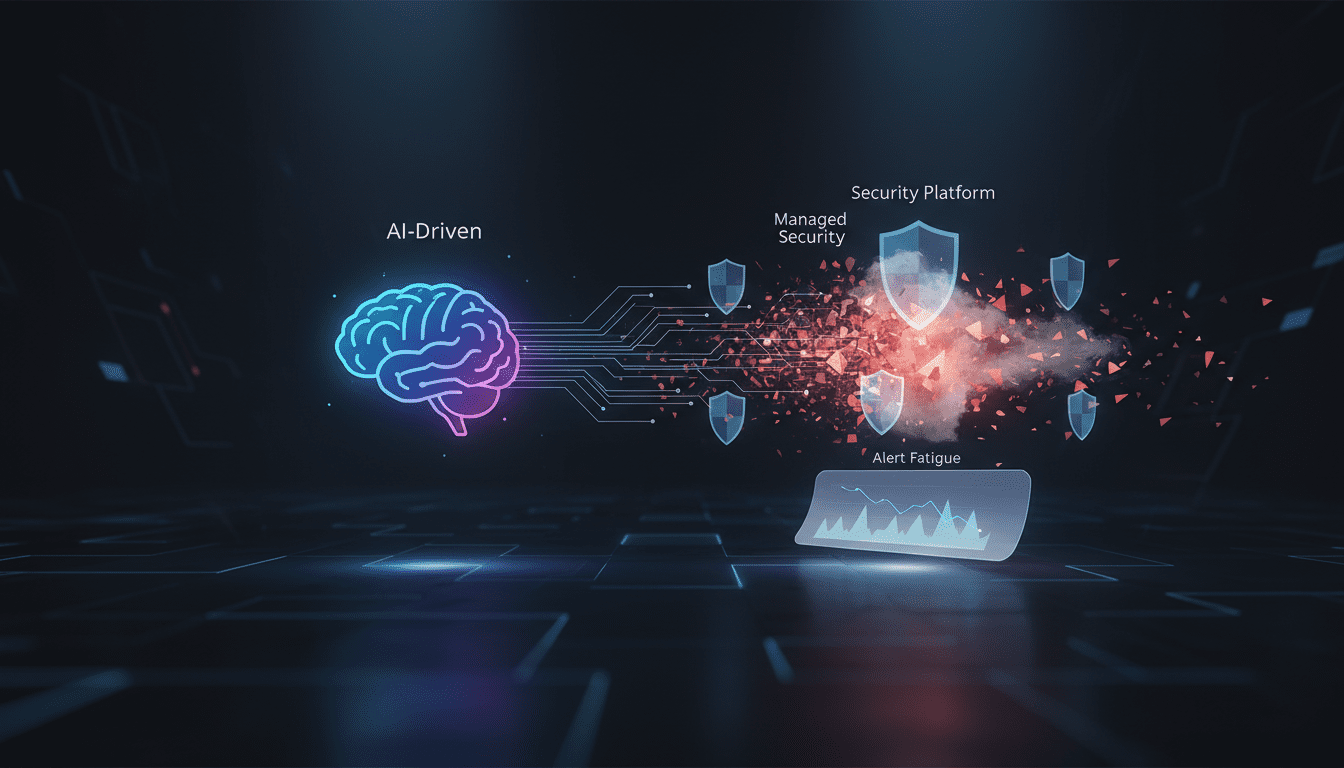
NWN’s AI-powered managed security operations suite, built on its Experience Management Platform (EMP), centralizes telemetry from Palo Alto, Cisco and Arctic Wolf to cut alert fatigue.
NWN’s EMP expansion and the new AI-powered managed security operations suite




NWN has announced an AI-powered managed security operations suite that runs on its Experience Management Platform (EMP). The company positions the suite as an operational layer intended to bring together alerts and telemetry from multiple vendors — including Palo Alto Networks, Cisco, and Arctic Wolf — into a single control plane. NWN’s release stresses operationalizing threat defense rather than simply adding another detection point product, and it places the Experience Management Platform at the center of that effort.
The announcement highlights integrations that feed telemetry into EMP: NWN calls out Cisco (specifically the Splunk observability roadmap), Arctic Wolf’s Aurora Superintelligence platform, and Palo Alto’s Prisma Access monitoring for hybrid environments. According to the company, these vendor feeds are combined to reduce the visibility gaps that many enterprises face today.
Why tool sprawl creates a “data swamp”
The persistent industry problem NWN is addressing is familiar to many security leaders: despite rapid evolution in security technologies — from XDR and SASE to CNAPP — most enterprises still run dozens of point products. The source material cites an average enterprise managing between 50 and 80 different security tools. That proliferation produces a “data swamp” of alerts in which critical signals can be obscured by volume and noise.
A 2025 ZK Research survey referenced in the announcement underscores the operational impact: security teams reported they reach only about 65% of inbound alerts. The shortfall is not attributed to neglect but to the sheer scale of inbound data. In NWN’s framing, the result is not merely inefficiency; it elevates business risk because uninvestigated or slow-to-remediate alerts can allow adversaries to operate undetected.
How NWN integrates vendor telemetry into a single control plane
NWN’s EMP is presented as an “operational control plane” that aggregates telemetry from multiple security vendors into a unified management layer. The company emphasizes that the suite is designed to accept telemetry from the vendor technologies it named and to use AI to reduce manual triage work. The source specifically mentions telemetry from Palo Alto’s Prisma Access monitoring for hybrid environments, Cisco-related data tied to the Splunk observability roadmap, and Arctic Wolf’s Aurora Superintelligence platform as inputs to EMP.
The goal, as described, is twofold: first, to provide a single pane where disparate signals can be correlated; second, to operationalize those signals so that alerts can move from detection to remediation in an automated or semi-automated way. NWN frames the EMP-based model as a way to deliver a “single, accountable managed service model” that can meet the speed requirements of modern incident response.
The AI era and the “Agentic Enterprise” challenge
The company frames the current environment as an era of the “Agentic Enterprise,” where automated agents, bots, and AI models now perform business tasks alongside humans. That shift, NWN argues, expands the attack surface in ways legacy security models were not designed to defend: defenders must now account for automated workloads, large language models, and interconnected cloud services.
The announcement also highlights how attackers are adapting: generative AI is already being used for phishing and to create polymorphic malware that evades signature-based detection. Against that backdrop, NWN positions AI in its suite not simply as a marketing claim but as tooling meant to reduce the burden on human analysts by handling routine triage and ticketing tasks. The company stresses the distinction between vendors who say they use AI and those who tie AI to concrete operational outcomes.
Enterprise implications: outcome-focused security and response times
A major theme in NWN’s messaging is the shift from “buying tools” to “buying outcomes.” The company argues that value now resides less in individual sensors and more in platforms that can analyze and act on data across an enterprise. In that context, NWN positions EMP as a centralized cockpit intended to combat “dashboard fatigue” and shorten time-to-action.
NWN highlights several enterprise-level implications:
- An operational control plane can replace fragmented dashboards and reduce the latency between alert and remediation. The source suggests that a “single, accountable managed service model” is required to enable the sub-hour response times enterprises need to stop modern breaches.
- AI-enabled managed services can help address the global shortage of security professionals by automating L1 triage and ticketing, freeing human experts to focus on higher-value activities.
- Hybrid cloud complexity — and the unique visibility challenges it creates — calls for monitoring that extends across cloud environments; NWN emphasizes Prisma Access monitoring for hybrid scenarios as an explicit example of that focus.
How the new suite addresses the talent gap and operational realities
NWN’s announcement connects the product strategy to workforce constraints. The source material notes a global shortage of security professionals and describes AI-enabled managed services as a way for organizations to expand defensive capacity without proportionally increasing headcount. Specifically, NWN says its approach automates L1 triage and ticketing workflows so that human analysts can concentrate on offensive security, strategic planning, and other high-value activities. The launch explicitly includes offensive security services as part of the offering.
NWN characterizes this blend of automation and managed services as a pragmatic response to the “operational reality” facing CIOs and CISOs: having the best point products is insufficient without a unified, accountable means of managing them.
Practical guidance for security leaders evaluating EMP-based managed services
The source provides three pragmatic recommendations aimed at CISOs and security architects evaluating the new generation of AI-enabled managed operations:
- Audit “shelfware” and prioritize integration: Reduce the risk of fragmented tooling by favoring platforms that provide robust APIs and can be unified under a single management layer. The announcement warns that best-of-breed point products become liabilities if they cannot contribute to a consolidated operational view.
- Prioritize mean time to remediation (MTTR) over detection metrics alone: Detection is only one part of the equation; NWN’s messaging emphasizes automating the transition from alert to remediation to lower dwell time. If escalation still depends on manual emails and calls, organizations risk being too slow to stop active threats.
- Make offensive security continuous: The offering includes offensive security services and the source recommends moving beyond annual penetration tests to continuous assessment driven by AI tools and managed services.
These recommendations align with NWN’s narrative that modern security operations must reduce manual friction and bake response into the management plane.
Broader implications for the security industry, developers, and businesses
NWN’s EMP expansion reflects several broader trends the announcement ties to industry direction:
- A move toward platform thinking: The shift from sensor-level buys to outcome-oriented platforms changes procurement and operations. Enterprises may consolidate management and monitoring responsibilities onto a narrower set of operational control planes rather than maintain large arrays of siloed products.
- Developer and DevOps integration: As security operations must see AI-driven workloads and hybrid traffic patterns, integration with observability and DevOps tooling becomes more important. The source explicitly calls out scenarios where older monitoring tools can’t see inside AI-driven traffic across cloud providers.
- Managed services and MSPs as force multipliers: Given workforce shortages and rapid increases in data volume and complexity, managed services that combine AI automation with vendor telemetry could become a primary model for organizations that lack scale to operate extensive internal SOC teams.
- Security economics and vendor claims: The announcement also underscores a market challenge: many vendors claim “AI-powered” capabilities, but NWN’s framing draws a distinction between AI as a marketing label and AI tied to operational reductions in analyst workload.
These points suggest potential shifts in how security teams, procurement groups, and engineering organizations allocate budget and integrate capabilities across observability, endpoint security, cloud monitoring, and managed services.
Where NWN’s messaging is specific — and where the source remains silent
The source material provides specific claims about integrations and strategic intent: telemetry feeds from Palo Alto’s Prisma Access monitoring, Cisco-associated observability (noted as the Splunk observability roadmap), and Arctic Wolf’s Aurora Superintelligence platform are cited as inputs into EMP. The company also explicitly states that the suite uses AI for operational tasks such as L1 triage and automated ticketing, and that offensive security services are part of the launch.
What the announcement does not specify in the source: it does not provide detailed architecture diagrams, exact workflow automations, pricing, contract terms, or a public availability date. The source likewise does not publish independent benchmarks or third-party validation of detection and response improvements. Those details were not included and therefore cannot be confirmed from the material provided.
Negotiating marketing language and operational reality
The NWN announcement surfaces a recurring tension in security product marketing: vendors routinely claim AI, but the operational value depends on how AI is applied to actual SOC workflows. NWN’s messaging attempts to narrow that gap by emphasizing concrete integrations, managed-service accountability, and automation of routine analyst tasks. The effectiveness of that approach will depend on how well EMP correlates disparate telemetry, automates safe remediation steps, and maintains a clear audit trail for decision-making — all aspects implied by NWN’s framing but not quantified in the source material.
For procurement teams and security architects, the practical question is whether a platform like EMP materially reduces MTTR and improves signal-to-noise in real deployments. NWN’s emphasis on a single control plane and vendor telemetry is an operational model designed to target those exact metrics.
Practical next steps for teams considering an EMP-centric operational model
Based on the guidance embedded in the announcement, security teams weighing this class of offering should consider the following actions:
- Inventory tool usage and integration capabilities: Identify which products are actively contributing telemetry and which are “shelfware.” Prioritize tools with robust APIs and event-forwarding capabilities that can feed into a centralized control plane.
- Define remediation SLAs and automation boundaries: Establish clear rules for what automated actions are permissible, how human escalation is triggered, and how incident response playbooks integrate with managed-service workflows.
- Validate hybrid cloud visibility: Test whether platform integrations provide the intended visibility into AI-driven traffic and hybrid cloud workloads. The announcement highlights Prisma Access monitoring for hybrid cases; teams with significant AWS/Azure footprints should verify coverage in those environments.
- Evaluate managed-service responsibilities: Clarify what “single, accountable managed service model” means contractually — who is responsible for detection, who authorizes automated remediation, and how incident reporting and compliance evidence will be provided.
These steps reflect NWN’s insistence that operationalizing security requires both technology integration and explicit governance.
NWN’s EMP expansion signals a broader shift: security value is increasingly measured by an organization’s ability to convert telemetry into rapid, accountable action rather than by the sheer number of detection tools in place. The company’s focus on integrating telemetry from established vendors and automating low-level triage addresses well-known pain points — tool sprawl, alert fatigue, and a shrinking window for remediation in a world where adversaries leverage generative AI.
Looking ahead, expect continued industry pressure toward operational control planes that centralize monitoring, incorporate observability data, and automate the routine elements of SOC workflows. Vendors will need to demonstrate not only the presence of AI but measurable reductions in analyst workload and improvements in MTTR. For enterprises, the practical challenge will be selecting platforms and managed services that deliver verifiable outcomes while preserving governance, visibility across hybrid environments, and the ability to adapt as adversaries and AI-driven traffic patterns evolve.