
Samsung Galaxy S26 Arrives Worldwide — Ultra Model Leads with Galaxy AI, Privacy Display and Snapdragon 8 Elite Gen 5
Samsung Galaxy S26 lineup and Galaxy Buds4 reach global stores with Galaxy AI features, Privacy Display, Snapdragon 8 Elite Gen 5, and new Buds4 audio design.
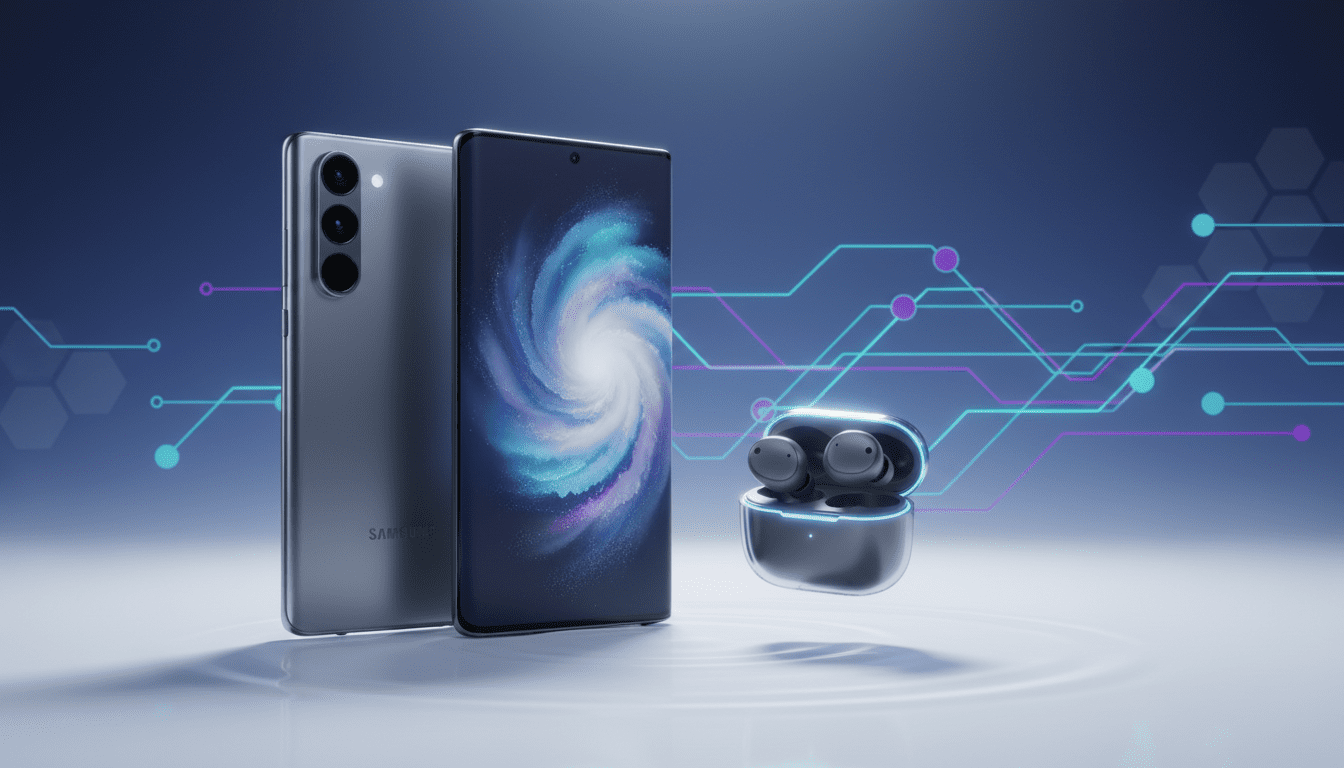
The Samsung Galaxy S26 lineup is now in stores globally, and the rollout marks a major step for Samsung’s push into AI-first smartphones: the Galaxy S26 Ultra is the runaway preorder favorite, the series introduces a pixel-level Privacy Display and is powered by a customized Snapdragon 8 Elite Gen 5 Mobile Platform for Galaxy to drive improved CPU, GPU and on-device AI performance. Alongside the phones, Samsung’s new Galaxy Buds4 family arrives with a redesigned form factor, upgraded audio hardware and AI-driven controls that are meant to pair tightly with the S26 experience.




What the Samsung Galaxy S26 lineup brings to market
Samsung’s newest family consists of three models — the Galaxy S26, Galaxy S26+, and Galaxy S26 Ultra — positioned as the company’s third generation of devices built around on-device intelligence. The launch transitions the devices from announcement into widespread retail availability at carriers, Samsung Experience Stores, and major retailers. Early ordering data indicates a pronounced preference for the Ultra model, which accounted for the majority of preorders. For consumers and enterprises, the S26 family presents a blend of incremental hardware upgrades and deeper software-driven features under the Galaxy AI banner that are designed to change everyday interactions with the phone.
Privacy Display: new display-level privacy controls
One of the headline features on the Ultra model is the Privacy Display, a display innovation Samsung describes as protecting privacy at the pixel level. Rather than relying solely on software overlays or obscuring content with lower-brightness modes, this approach aims to limit what can be seen from off-axis viewing angles by adjusting pixel rendering in micro-regions of the panel. The result is intended to make sensitive content harder to shoulder-surf while preserving legibility for the primary user. For professionals who handle confidential documents or for commuters frequently working in public, this hardware-assisted privacy feature represents a shift in how manufacturers can embed protective measures directly into the display pipeline.
Performance and on-device AI with the Snapdragon 8 Elite Gen 5 Mobile Platform for Galaxy
Under the hood, Samsung pairs the S26 lineup with a bespoke version of Qualcomm’s Snapdragon 8 Elite Gen 5 Mobile Platform for Galaxy. Samsung says the custom tuning elevates CPU and GPU throughput while allocating additional silicon resources to AI workloads. That architecture enables Galaxy AI features to run with lower latency and reduced cloud dependency, which is important for privacy-sensitive tasks and offline functionality. The improved processing also feeds computational photography pipelines and advanced stabilization, letting features such as Nightography video and Super Steady deliver clearer, smoother footage in challenging lighting and motion scenarios. For developers, the platform’s emphasis on local AI inference opens possibilities for richer on-device models and faster experimentation without constant reliance on networked servers.
Galaxy AI features woven into daily workflows
Galaxy AI appears to be the connective tissue of the S26 experience rather than a single app. Samsung showcased contextual assistants that proactively suggest actions — for example, a Now Nudge that surfaces context-based recommendations and a Now Brief that aggregates upcoming events and reminders. These features aim to anticipate needs rather than wait for explicit prompts, blending elements of personal assistants, calendar intelligence and contextual notification management. Integrations with third-party AI ecosystems and tools could deepen the value proposition for productivity users, enabling tighter flows between notes, email, CRM platforms and marketing automation tools. By offloading more inference to the handset, Samsung is betting on a hybrid model where local intelligence and cloud services collaborate to reduce latency and preserve sensitive data.
Camera and imaging upgrades targeted at low-light and motion
The Galaxy S26 Ultra continues Samsung’s focus on computational photography. Improvements such as Nightography video aim to capture cleaner, better-exposed video in low-light conditions by combining sensor performance and AI-driven noise reduction. Super Steady stabilization uses combination of hardware stabilization and algorithmic correction to reduce jitter during movement, making handheld video more usable without gimbals. On the hardware side, the Ultra retains a sophisticated multi-sensor array and telephoto capabilities that prioritize optical quality for both stills and motion. For content creators, the S26 Ultra offers practical upgrades that improve real-world capture, especially for creators who shoot in mixed lighting or require smoother footage on the move.
Galaxy Buds4 series: redesign, sound improvements and AI controls
Samsung launched two earbuds in parallel: the Galaxy Buds4 Pro and the more mainstream Galaxy Buds4. Both adopt a new blade-style silhouette and pinch gesture controls, arrived from an ergonomic design process built on hundreds of millions of ear shape data points and thousands of simulations. The Buds4 Pro ups the audio hardware with a wider woofer and enhanced Adaptive Equalizer technology, plus improved Active Noise Cancellation to deliver richer, high-fidelity sound. Both models incorporate hands-free, AI-enabled features that are designed to work seamlessly with the Galaxy S26 phones — from automatic device switching to voice-triggered assistant tasks. The new form factor and tighter AI integration make the Buds4 family an attractive companion for users invested in the Samsung ecosystem.
Pricing, color options and availability
Samsung has positioned the Galaxy S26 family at premium price points: the S26 starts at $899.99, the S26+ begins at $1,099.99, and the S26 Ultra starts at $1,299.99. The smartphones are available in multiple finishes — Cobalt Violet, White, Black, Sky Blue — with online-exclusive Pink Gold and Silver Shadow options on certain channels. The Galaxy Buds4 Pro retail at $249.99 while the standard Buds4 are priced at $179.99. The devices have entered broad retail distribution, appearing at carrier stores, Samsung’s e-commerce channels and major retailers such as Amazon and Best Buy. For businesses deploying fleets of devices, the staggered SKUs and colorway variety will affect procurement decisions when balancing cost, branding and user experience needs.
Who benefits from upgrading to the Galaxy S26 family
The S26 series targets several user groups. Power users and mobile-first creators will gravitate toward the Ultra for its enhanced computational photography, stabilization and performance headroom. Professionals concerned with on-device privacy — lawyers, healthcare workers, consultants — may find the Privacy Display a pragmatic choice for protecting sensitive information in public settings. Mainstream buyers who prioritize battery life, balanced performance and affordable entry into Samsung’s AI ecosystem will find the base S26 or S26+ compelling. Those already using Samsung’s ecosystem — Galaxy tablets, Watch, SmartThings and One UI continuity features — will gain more value through device-to-device integrations and the companion Buds4 audio features.
Developer opportunities and platform implications
Samsung’s emphasis on local AI and a tuned Snapdragon platform signals new opportunities for developers. On-device inference reduces friction for latency-sensitive apps — AR filters, real-time video processing, and interactive assistant experiences become more feasible when the phone itself can handle heavier model workloads. This trend dovetails with broader shifts in the mobile developer toolchain toward smaller, optimized models and frameworks that support heterogeneous compute (CPU, GPU, NPU). For enterprise developers, tighter device-level AI also raises questions about model deployment, versioning and secure update mechanisms. Security teams and mobile device management vendors will need to adapt policies that account for on-device models and privacy-preserving AI features.
How the S26 family fits into the broader competitive landscape
Samsung’s arrival with a more AI-centric messaging reflects a wider industry pivot: device makers are racing to move AI from cloud-only services onto local silicon. Apple’s on-device intelligence initiatives and Google’s Pixel AI efforts have set the stage for manufacturers to differentiate on latency, privacy and offline capabilities. Samsung’s Privacy Display is a more hardware-forward privacy claim than most competitors offer, while the Ultra’s camera and stabilization enhancements keep the company competitive in content creation. In audio, the Buds4 lineup faces established products from rivals such as Apple and Sony; Samsung counters with integrated AI features and a new ergonomic emphasis.
Practical user considerations: what the devices do, how they work, and why they matter
At a base level, the Samsung Galaxy S26 phones act as general-purpose smartphones with a clear priority on enhanced machine intelligence and media capture. The key functional shifts are: more tasks being anticipated and surfaced by Galaxy AI; heavier inference happening on-device via the Snapdragon 8 Elite Gen 5 Mobile Platform for Galaxy; and display- and hardware-level features — like Privacy Display and Super Steady — that combine hardware and software for tangible user benefits. For the average buyer, this means faster assistant responses, improved low-light video, and a display that makes casual visual eavesdropping harder. For enterprise deployments, the value proposition centers on potential privacy gains and local processing that can reduce dependence on external cloud services, though IT teams will need to evaluate management and security implications. Availability is immediate — the phones and earbuds are in global retail channels now — making the upgrade decision largely one of priorities, budgets and ecosystem alignment.
Business and enterprise implications
For businesses, the S26 family offers both opportunities and considerations. On the positive side, stronger on-device AI can enable mobile workforce apps with better responsiveness and reduced data egress to cloud providers, which helps with compliance and latency. Features like Privacy Display could reduce visible data exposure in shared work environments. However, deploying AI-enabled handsets at scale requires attention to update policies, model governance and integration with existing mobile application management stacks. Enterprises should also assess accessory compatibility, carrier provisioning, and trade-in or refresh cycles before committing to broad rollouts.
Potential pitfalls and areas to monitor
While the S26 line brings meaningful upgrades, there are areas buyers should watch. New hardware features that rely on proprietary silicon tuning may complicate cross-vendor app behavior and model portability. Privacy Display, while innovative, changes usability in subtle ways — for example, how content appears in multi-user handoffs or when using screen-capture workflows. Battery impact from continuous on-device AI processes and real-world performance of adaptive features like the Adaptive Equalizer and ANC on the Buds4 should be evaluated in long-term use. Finally, integration with third-party AI services and enterprise systems will be a practical concern for developers and IT managers.
Ecosystem connections: AI, productivity tools, and developer services
Samsung’s moves sit at the intersection of several ecosystems. Galaxy AI will interact with productivity suites, note-taking apps, CRM platforms and automation tools to deliver smarter, context-aware experiences. Developers working with on-device ML frameworks, mobile SDKs and edge-optimized models stand to benefit from the S26’s computational upgrades. Security and MDM vendors will need to extend support for the new privacy and AI features to ensure enterprises can enforce policies uniformly. Content creators and marketing teams may use the S26’s camera and audio capabilities to produce higher-quality mobile-first content that plugs directly into social media and analytics pipelines.
Broader industry impact and what this launch signals
Samsung’s global launch of the Galaxy S26 and Buds4 underlines the industry’s accelerating shift toward integrating AI into the core smartphone experience. By combining a more capable on-device processor, display-level privacy, and AI-first software features, Samsung is staking a claim in the space between cloud-based assistants and fully local intelligence. That hybrid approach is likely to influence competitors and shape developer expectations for mobile AI, pushing the market toward smaller, efficient models and more robust on-device compute stacks. For consumers, the benefit will be faster, more private interactions; for enterprises, it will mean new options for keeping data localized without sacrificing useful intelligence.
Looking ahead, the pace of on-device AI development will hinge on a few factors: improvements in battery-efficient inference, the maturity of developer tools that simplify model deployment across device variants, and industry-wide standards for privacy and interoperability. Samsung’s S26 launch is an incremental but notable step on that path — it tightens the integration between hardware and software and sets new expectations for what flagship phones should do when intelligence is treated as a first-class system capability.
The next months will reveal how well those promises translate into everyday value: whether Galaxy AI features become genuinely helpful extensions of user workflows, how Privacy Display performs in diverse lighting and workplace scenarios, and how the Buds4 audio experience stacks up in long-term testing. As manufacturers continue to push AI deeper into mobile devices, expect competing vendors, developer communities, and enterprise buyers to experiment with new forms of on-device services, privacy tools and content workflows — all of which will shape the smartphone landscape beyond this current release.