AI Drives Data Center Overhaul: DCW Speakers Warn of Power, Cooling and Supply Constraints
At Data Center World in Washington, DC, experts told attendees that AI is forcing data center operators to rethink power, cooling, and construction as liquid cooling and modular approaches scale rapidly.
FACTUAL ACCURACY


- Only include information explicitly supported by the source content.
- Do not infer, assume, or generalize beyond the source.
- Do not invent features, architecture, benchmarks, or integrations.
- If a detail is uncertain or not clearly stated, omit it.
AI Demand Is Forcing Fundamental Changes in Data Center Planning
Speakers at this week’s Data Center World (DCW) conference in Washington, DC presented a consistent picture: the rapid expansion of generative and agentic AI workloads is creating a cascade of requirements that touch every aspect of data center design and delivery. Representatives from research firm Omdia, operator Aligned Data Centers, and infrastructure vendor Vertiv described how surging demand for compute — particularly GPU-based systems — is translating into tougher power requirements, new cooling demands and shifting construction priorities.
At the panel, Phill Lawson-Shanks, CEO of Aligned Data Centers, described a concrete example of that pressure: partway through one construction project a customer increased expected power needs by 50 percent, forcing the operator “to restructure everything to be able to introduce enough cooling and find more power from the grid.” That anecdote framed other comments at the show about how AI’s infrastructure footprint is reshaping timelines, vendor choices, and site selection practices.
Power Availability, Permitting and Talent Are New Bottlenecks
Panelists identified electricity availability, permitting processes and a shortage of electrical engineering talent as larger constraints on expansion than land alone. Aligned Data Centers’ approach, according to Lawson-Shanks, has been to secure equipment and sites far ahead of need: the company buys equipment in bulk about 2.5 years in advance and purchases land parcels across the country that may prove useful later. He also said Aligned has 88 data center buildings currently under construction and that all of those buildings have already been leased.
Omdia analysts presented a complementary view. Shen Wang told the DCW audience that while transformers and power shelves are heavily backlogged in the supply chain, the resulting delays “only lead to a delay of a few months,” and that most projects find a way to move forward. Alan Howard, another Omdia analyst, characterized the current moment as an “unprecedented volume of data centers currently under construction or planned,” and said the firm had revised its build-out projections upward compared with the prior year.
Those combined perspectives — operators hedging with early purchases and land acquisition, and analysts tracking widespread project pipelines despite component bottlenecks — framed a central tension described repeatedly at the conference: demand for AI compute is large enough that projects will proceed, but doing so requires new strategies to manage power, supply chains and regulatory friction.
Liquid Cooling Is Scaling from Specialized to Core Infrastructure
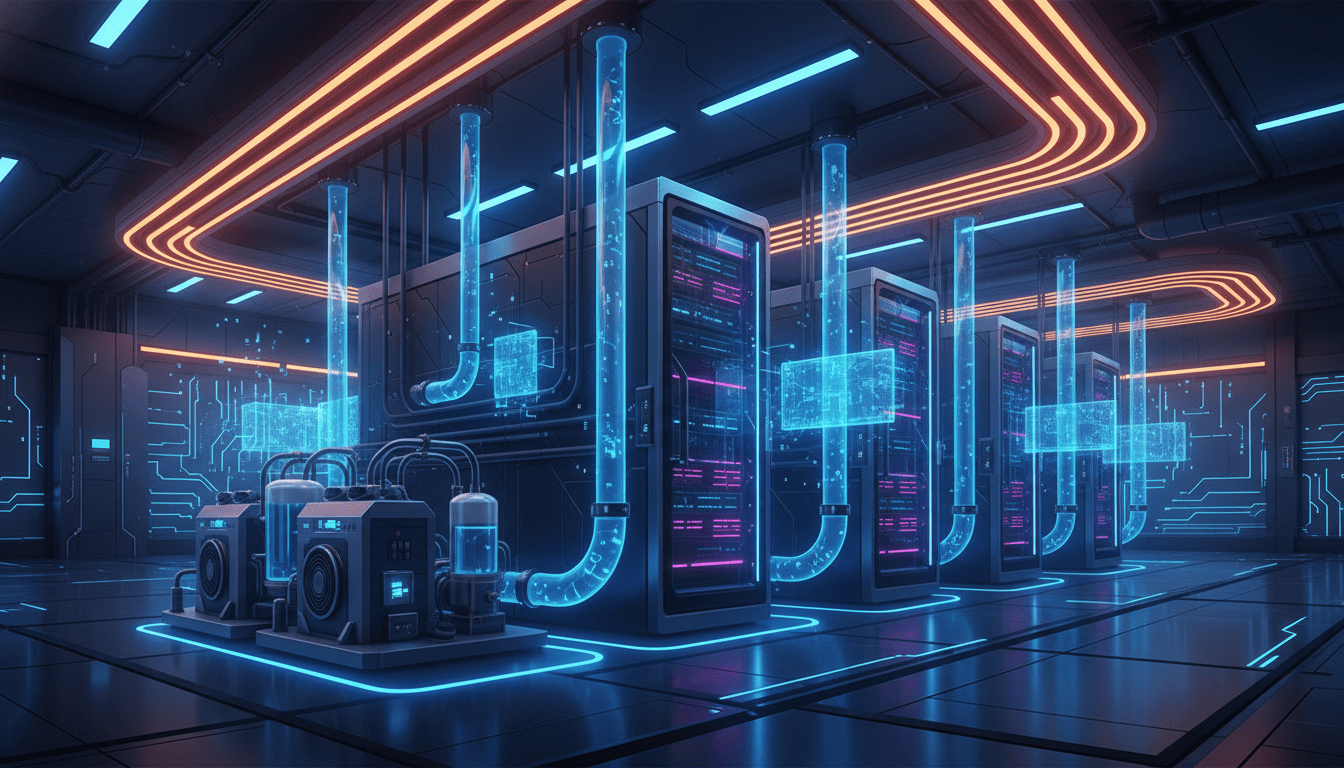
A major technical shift discussed at DCW was the acceleration of liquid cooling adoption. Omdia’s Shen Wang presented shipment and capacity figures that signal a rapid market transition: the volume of liquid-cooled chips is projected to increase fivefold between 2025 and 2030, and the market for cold plates — which provide chip-proximate liquid cooling — was reported at 8 million shipments in 2025 and projected to reach 356 million by 2030. Wang also stated that liquid cooling capacity equaled air cooling capacity in 2025 and that, by the end of 2026, liquid cooling capacity would double air cooling capacity.
Speakers emphasized that this growth does not make air cooling obsolete. Wang noted that heat sources beyond processors — including power shelves, memory, SSDs, switches, motherboards and busbars — will still require air cooling even as more chips move to liquid-cooled form factors. The combined message was that operators must plan for heterogeneous thermal loads and that liquid cooling is becoming a necessary element of facilities aiming to host high-density AI racks.
Integrating Power and Cooling into Repeatable Modules
Vertiv’s chief product and technology officer, Scott Armul, urged planners to stop treating compute, power and cooling as separate procurements and instead design integrated modules and standardized building blocks that can scale rapidly. Armul argued for defined interfaces between coolant distribution units (CDUs) and other parts of the thermal and mechanical systems and noted that modern simulation capabilities allow operators to model interactions across systems.
“We can now simulate the whole environment, so we know that we need to adjust liquid cooling valves and alter CDU set points to optimize facility cooling and efficiency,” Armul said, adding that these considerations are crucial as liquid cooling is deployed at gigawatt-scale campuses at an unprecedented level. His remarks framed modularity and systems-level simulation as practical responses to the complexity introduced by AI-scale deployments.
Supply Chain Constraints and Project Workarounds
Multiple speakers described supply chain friction for major components as a material factor in project planning. The conference narrative acknowledged that transformers and power shelves are “heavily backlogged,” a situation some observers said could derail projects. Omdia’s Shen Wang pushed back on the notion that these backlogs would stop buildouts altogether, briefing attendees that such issues typically produce short delays measured in months and that projects “figure out a way to move forward.”
Aligned Data Centers’ experience — securing equipment years in advance and buying land with an eye to future development — exemplified one workaround. Speakers also pointed to the tension between demand and likely practical limits: while “people need AI so large AI factories will move forward somehow,” the pace and form of expansion will be mediated by grid access, regulatory timelines and available skilled labor.
Who’s Affected and How Operators Are Responding
Panelists at DCW described a rapidly expanding ecosystem of actors engaged by AI-driven demand: data center operators managing construction and leasing; customers whose compute requirements can change midbuild; vendors supplying power and cooling hardware; and research firms tracking market volumes and component shipments. Aligned’s example of a mid-project customer power increase and the company’s strategy of securing equipment 2.5 years ahead underscore how operators are changing procurement and site strategies to mitigate uncertainty.
Vertiv’s comments about modular, integrated design suggested another operational shift: instead of assembling a data center from a set of separately procured systems, some operators and vendors are moving toward pre-defined modules with standardized interfaces between compute racks, CDUs and power infrastructure. That approach, speakers argued, supports faster scaling and reduces the need for bespoke, one-off engineering work at each site.
What the Numbers Presented at DCW Mean for Capacity Planning
Speakers and analysts used concrete metrics to describe the changing capacity picture. Omdia’s figures on cold-plate shipments — 8 million in 2025 versus a projected 356 million in 2030 — and the projection that liquid cooling capacity would match then overtake air cooling capacity by the end of 2026 provide numerical anchors to the claim that cooling architectures are shifting rapidly. Aligned’s disclosure of 88 buildings under construction and that all are leased illustrated the scale of operator commitment to expanding supply.
Those data points were presented in the context of a broader industry movement: Omdia analysts said they had repeatedly revised upward an already-large estimate of planned and ongoing data center construction, signaling that momentum for additional capacity shows few signs of abating despite component and permitting constraints.
Broader Industry Implications for Vendors, Operators and Regulators
Speakers at DCW tied their technical observations to business and industry-level effects. The need to secure electricity, to navigate permitting and to find qualified electrical engineering talent suggests that the bottlenecks for AI-scale deployments are not purely about compute hardware. Supply chain backlogs for transformers and power shelves imply a need for procurement strategies that extend far beyond the typical near-term purchase cycle. Aligned’s experience of buying in bulk years ahead and acquiring land with speculative intent illustrates one commercial response to that environment.
Vertiv’s call for integrated modules and standardized interfaces hints at potential market opportunities for vendors that can deliver repeatable systems and simulation tools that model facility-level interactions. Omdia’s upward revisions to build-out projections suggest firms in the data center ecosystem will continue to see demand, but that demand must be translated into practical projects that satisfy grid constraints and regulatory timelines.
Operational Questions Answered at DCW: Power, Cooling and Scheduling
Attendees raised and speakers addressed practical operational questions tied to the AI build-out: how to secure sufficient grid power when demand increases mid-project (Aligned’s restructuring example); how to manage cooling for higher rack densities (the projection of liquid-cooling growth and the continued need for air cooling for non-processor heat); and how long supply chain delays are likely to last (Omdia’s assessment that delays often amount to months and not project cancellations).
Speakers stressed the importance of planning at scale — from early procurement and land acquisition to simulation-driven tuning of CDUs and liquid-cooling valves — as a way to keep projects on track while accommodating evolving customer specifications.
Market Signals and Related Reporting Mentioned at the Conference
The DCW program connected these operational and technical themes to wider market developments. Omdia’s analysts described an “unprecedented volume” of data center construction and planning activity. The conference program also referenced coverage of large-scale campus investments elsewhere in the market; for example, one session directed readers to reporting on high-profile commercial investments in powered compute campuses across North America.
These references at DCW placed the conference’s technical discussions inside a broader commercial narrative about where capital and project activity are flowing in response to AI-driven demand.
Implications for Developers, IT Teams and Procurement Functions
While the primary focus at DCW was infrastructure, speakers’ themes have implications for groups that plan and procure compute capacity. Sudden increases in customer power needs, as described by Aligned, can change project scope and timeline; supply chain backlogs for large electrical components can create months-long delays; and the rise of liquid cooling alters the balance of thermal strategies in a facility. Those realities suggest that procurement teams and IT managers involved in large-scale AI deployments must coordinate closely with facilities, procurement and legal teams to align power, permitting and delivery schedules.
Armul’s emphasis on simulation and standardized interfaces also points to potential shifts in how vendors and customers negotiate system integration: more emphasis on pre-integrated modules and on system-level modeling to predict operational behavior under high-density loads.
People at DCW framed these shifts as practical challenges to be managed rather than insurmountable obstacles. Omdia’s Shen Wang captured that sentiment when he said that “people need AI so large AI factories will move forward somehow,” a line that underpinned much of the discussion about procurement strategies and capacity planning.
As AI-driven demand continues to push rack densities higher and expand the scale of compute campuses, the industry is likely to keep iterating on procurement timing, modular design and integrated simulation capabilities. Vendors that offer well-defined interfaces between CDUs, power systems and compute racks and operators that secure long-lead components and land in advance will be better positioned to meet evolving customer needs. Continued monitoring of component lead times, permitting timelines and talent availability will determine how quickly planned projects translate into operational capacity and how the balance between air and liquid cooling evolves across the fleet.