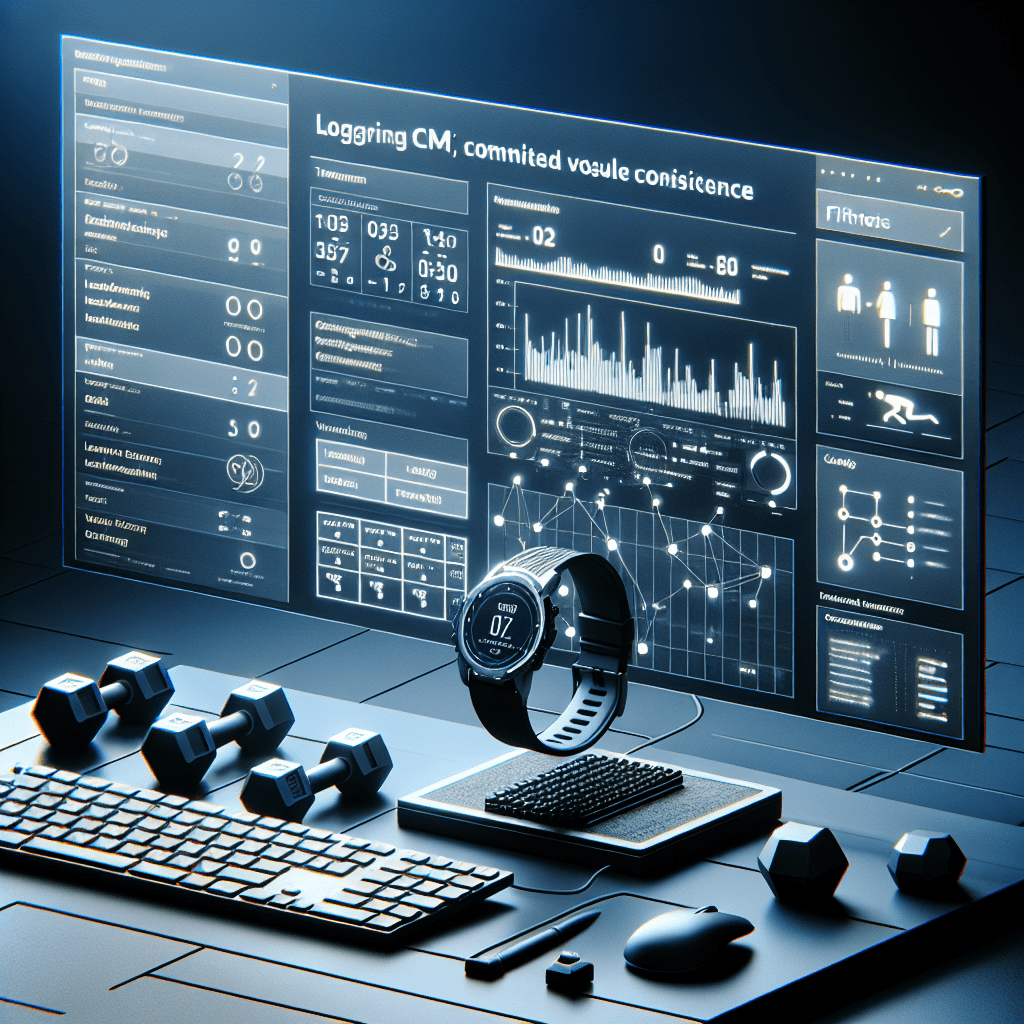
GitBalance: Log Workouts as Git-Style Commits and Visualize Consistency from the CLI
GitBalance lets developers log workouts as Git-style commits from the CLI and view consistency on a contribution-style graph; the project is in early release.
A developer-built tool that treats workouts like commits




GitBalance is a small, developer-focused tool that maps fitness activity to a Git-like workflow: instead of traditional workout trackers, it records sessions as commit entries and renders those entries into a consistency graph. The project was created by a developer who said they felt out of balance between coding and health and wanted a simple, code-friendly way to make exercise visible in the same rhythm as daily commits. That combination—fitness tracking expressed through developer metaphors—anchors GitBalance’s appeal and shapes how it’s presented and used.
What GitBalance does
At its core, GitBalance converts individual workout entries into a contribution-style record. The creator describes the system as tracking workouts “like GitHub commits” and exposing a visual graph that represents consistency over time. The intention is to make exercise a trackable, habitual pattern that fits naturally into the workflows many developers already use—command-line interactions and commit metaphors—so that logging activity becomes as familiar as committing code.
How GitBalance works from the CLI
GitBalance is designed to be used from the command line. The project’s examples show how straightforward that interaction is: users can add entries with commands such as
gitbalance commit -m "30 min workout"
or
gitbalance commit -m "stretch + wrist recovery"
These examples indicate the interface mirrors Git’s commit style—accepting a message flag (-m) with a short description of the session—and suggests the barrier to entry is intentionally low for anyone who already works in terminals. The creator explicitly notes that the tool is usable from the CLI, which positions GitBalance for an audience comfortable with shell-driven utilities and quick, text-based input.
Why a commit-style workout log matters for developers
The core idea behind GitBalance is behavioral: by reframing workouts as commits, the tool leverages developers’ existing habits and attention patterns. For many engineers, the commit metaphor is tightly tied to daily progress tracking, streaks, and the satisfaction of visible continuity. Translating workouts into that same signal could make fitness activity easier to maintain—especially for people who find habit formation easier when it’s integrated into tools they already use.
From a psychological perspective, this approach uses familiar affordances—short, discrete actions (commits), visible continuity (a graph or streak), and low-friction input (a single CLI command)—to lower the activation energy for logging exercise. The repository-style record also makes activity comparable across days and weeks, turning an otherwise private habit into a visible, quantifiable pattern.
Who the tool is aimed at
The creator explicitly solicits input from “other devs,” making the intended audience clear: developers who want a lightweight, code-centric way to track physical activity. Because GitBalance uses CLI commands and a commit metaphor, it’s likely to be most comfortable for people who spend time in terminals and appreciate minimal, text-first workflows. The simplicity of the example commands suggests the tool is not intended to replace full-featured fitness platforms, but rather to complement developers’ daily routines with a low-effort logging mechanism.
What the project’s current status means for users
The project is described as “very early,” and the creator asks for honest feedback from developer peers. That status carries a few practical implications: expect basic functionality focused on logging and visualization rather than a polished ecosystem of integrations, advanced analytics, or a mature user interface. The early-stage nature also implies the project will likely evolve based on user feedback, which creates an opportunity for early adopters to influence feature direction and priorities.
Because the creator reached out publicly with examples and a website, interested developers can inspect the tool, try the CLI commands, and respond with feedback. The public call for input signals that design decisions, feature scope, and usability improvements may still be in flux—and that the project’s next steps could be shaped by the developer community.
Design implications and trade-offs of the Git-style approach
Mapping exercises to commits simplifies input and leverages an established mental model, but it also narrows what the tool is optimized for. A commit-centric logging system favors short, discrete annotations about activity—duration, type, or a short note—rather than continuous metrics like heart rate, GPS-based routes, or complex workout histories. That’s an intentional trade-off: by sacrificing depth for ease, GitBalance lowers the barrier to consistent logging. For developers who care primarily about building rhythm and visibility into whether they exercised on a given day, this can be effective. For users who need detailed performance metrics or coach-oriented analytics, a commit-style tool may feel too minimal.
Practical uses and habits this pattern supports
GitBalance’s design encourages a few concrete behaviors:
- Daily or regular logging: Short CLI commits make it practical to note activity immediately after a session, reducing the likelihood of missed entries.
- Habit visibility: A contribution-style graph turns isolated workouts into a visible streak, making consistency easier to perceive.
- Quick annotations: The -m message pattern allows users to capture what the session was—e.g., “30 min workout” or “stretch + wrist recovery”—which can be helpful for spotting simple trends (time, type).
- Low-friction recovery entries: The example “stretch + wrist recovery” suggests the system supports varied session types beyond formal workouts, reinforcing a broader notion of health-relevant activities.
All of these practices align with lightweight habit formation techniques: short, repeatable actions that can be recorded in seconds and reviewed visually over time.
Developer workflows and where GitBalance could fit
Because GitBalance presents itself as a CLI utility with commit-style inputs, it can slot into existing developer workflows without requiring a graphical interface or mobile app. Developers could add an entry between tasks, from remote terminals, or as part of automated scripts that record scheduled activity. While the project’s available details are limited to the core logging and graph visualization concepts, the CLI-first orientation aligns it with toolchains developers already trust—terminals, simple scripts, and command-line productivity tools.
This approach also means GitBalance can act as a companion to other developer-focused tooling: references to developer tools and productivity software are natural in this context because many engineers prefer small, composable utilities that do one thing well and play nicely with scripts or dotfiles.
What the source reveals and what remains unspecified
The available information is deliberately concise. From the creator’s note, we know: the motivation (a desire for balance between coding and health), the primary mechanism (tracking workouts like commits), the presentation (consistency graph), the input method (CLI), example commands, and the project’s early status plus a request for feedback from developers. The source does not provide details about data storage, privacy, syncing, integrations with external services, distribution model, licensing, or platform support. Those gaps mean potential users should not assume features such as cloud sync, GitHub integration, mobile apps, or export capabilities—none of those are described in the source and therefore should be treated as unknown until confirmed by the project’s documentation or maintainers.
Community feedback and iterative development
The project author’s explicit request for “honest feedback from other devs” frames the release as an invitation to collaborate. In early-stage projects this often leads to rapid iteration: usable core mechanics are tested and refined through real-world use, and priorities shift according to what adopters find most valuable. For developers interested in influencing the direction of GitBalance, the immediate path is clear: try the CLI commands, evaluate how well the commit metaphor fits personal workflows, and share concrete feedback about usability, edge cases, or desired features.
Broader implications for fitness tracking and developer wellness tools
GitBalance sits at an intersection of two trends: increasing attention to developer wellness and the rise of low-friction habit tools. The project illustrates how domain-specific metaphors—here, the commit—can be repurposed to promote nontechnical goals like health. For the software industry, such experiments suggest routes for improving workplace wellbeing that respect professionals’ existing habits and tooling preferences. If small utilities like GitBalance prove effective at increasing consistency through minimal friction, organizations and developer-tool vendors may take note and explore similar, context-aware wellness interventions.
For developers and product teams, GitBalance is a reminder that the most adoptable tools often mirror users’ established mental models. The clearer and more seamless the mapping between an everyday workflow and a desired behavior, the higher the chance of sustained adoption.
How to try GitBalance and provide feedback
The creator published a short announcement that includes a website address and examples of CLI usage, and they invited feedback from fellow developers. For those curious to experiment, the process suggested by the source is straightforward: visit the project’s public page to learn more and use the example commands to add entries from the terminal. Because the project is in an early stage, prospective users should expect a direct channel for feedback—either via the site or the project’s preferred communication method—where they can report usability observations or request features.
Security, privacy, and data considerations to keep in mind
The source does not describe how GitBalance stores or manages logged entries, so users should treat data-handling details as unspecified. Early-stage developer tools vary widely in how they persist and share information: some keep everything local by default, others offer optional sync, and some integrate with external platforms. Until the project’s documentation clarifies storage, export, or sharing behavior, prospective users who are concerned about privacy or organizational policy implications should test cautiously and avoid logging sensitive information.
Where this idea could lead in developer tooling
GitBalance’s lightweight, commit-oriented approach opens a set of possible directions—while remaining speculative, these are natural extensions that follow from the project’s existing constraints and audience expectations: tighter integrations with developer environments, richer visualizations of long-term consistency, or simple automation hooks for routine logging. The source itself does not claim any of these developments; instead it emphasizes the initial, minimal viable idea and a desire for community feedback to guide what comes next.
The most plausible evolution for a tool like this is incremental improvement informed by user input: tweaks to the CLI UX, clearer data-handling defaults, and enhancements to the visualization. Any such steps would likely be guided by the early adopters the creator explicitly wants to hear from.
Developers who care about productivity and wellbeing will find the concept accessible: it reframes health behavior as a tiny, daily action that fits into the context of code-centric workflows. For teams and individuals looking to nudge consistency without prescribing a single “right” form of exercise, a commit-style log can be an unobtrusive complement to existing fitness routines.
Looking ahead, the notion of making nontechnical habits measurable and visible within technical workflows points toward a subtle but meaningful category of developer-first wellbeing tools—small utilities that align with daily practices rather than disrupting them. If GitBalance gains traction among developers, its early feedback-driven evolution could serve as a practical model for other micro-tools that aim to nudge healthier habits inside the environments where people already spend most of their time.